Bless Their Hearts: American Brands Keep Trying to Do Kawaii and the Results Are Deeply Chaotic
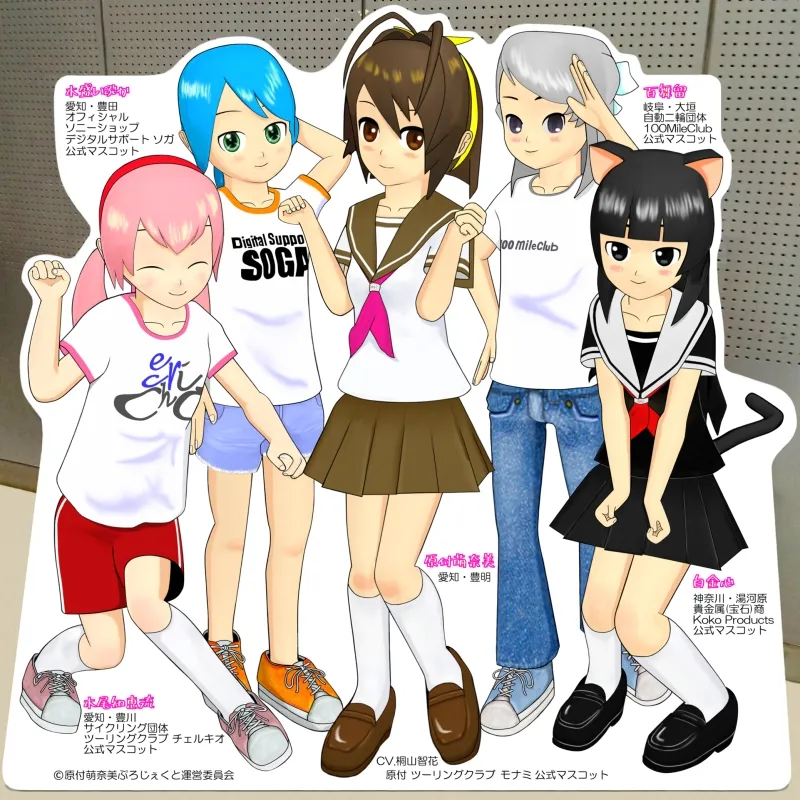
Photo: Copyright holder: Monami Gentsuki project steering committee Photographer: SetoMonamer, CC BY-SA 3.0, via Wikimedia Commons
Somewhere in a corporate boardroom, at some point in the last decade, a marketing executive said the words "let's make it kawaii" and a room full of people nodded enthusiastically without anyone stopping to ask what that actually means. This is the origin story of roughly 40% of the content we're about to discuss.
Kawaii (可愛い) — Japan's beloved aesthetic of cuteness, softness, and a kind of weaponized innocence — is not simply "make it pink and add a face." It is a full cultural language with grammar, history, and emotional nuance that took root in Japan in the 1970s and has since evolved into one of the most recognizable and beloved visual traditions on the planet. Sanrio, Rilakkuma, Gudetama, the entire Harajuku fashion ecosystem — these aren't accidents. They're the result of a culture that takes cuteness seriously, as both art form and emotional philosophy.
American brands, bless them, have looked at all of that and said: "We could do that. How hard could it be?"
The Anatomy of a Kawaii Miss
Let's start with the fast food sector, because it is a rich and terrible goldmine.
Over the past several years, multiple major American fast-food chains have launched "cute" mascot campaigns or limited-edition packaging clearly inspired by Japanese kawaii aesthetics. The results have ranged from "charming if slightly confused" to "this mascot looks like it has seen things." The core issue is usually the eyes. Kawaii character design relies on a very specific emotional vocabulary — oversized, slightly downward-tilted eyes that communicate vulnerability and warmth. When American designers attempt this without that cultural fluency, you get characters that look less "adorable" and more "mildly haunted."
There's also the color problem. Authentic kawaii palettes are carefully considered — soft pastels, warm whites, deliberate pops of color that feel gentle rather than aggressive. American corporate "cute" has a tendency to crank the saturation up to a level that feels less "cozy Harajuku boutique" and more "the inside of a Chuck E. Cheese after a sugar rush." The intention is there. The execution is loud.
The Luxury Bracket: Expensive and Unhinged
If fast food kawaii is chaotic, luxury brand kawaii is chaotic and costs $600.
The high-fashion world has been circling Japanese cute culture for years, and some of the resulting collaborations have been genuinely stunning — considered, respectful partnerships with actual Japanese artists and brands that honor the source material. And then there are the others.
Picture: a major American luxury house releases a limited-edition handbag collection "inspired by Japanese kawaii culture." The bags are technically well-made. They are also covered in a proprietary cartoon character that looks like Hello Kitty's estranged American cousin who went to business school. The character has a name that sounds vaguely Japanese but isn't quite. The campaign describes kawaii as "a Japanese trend" in the same breath that it calls their $450 crossbody bag "the ultimate expression" of it. Japanese fans on Twitter (now X, but we'll always call it Twitter) had thoughts. Many, many thoughts.
This is the cringe zone: the space where cultural appreciation tips into cultural cosplay, where the aesthetic is borrowed without the understanding, and where the price point somehow makes it worse rather than better.
The Wins (Yes, There Are Wins)
Here's where we put down the roasting fork for a moment, because fairness demands it: some American brands have actually done kawaii-adjacent things really, really well.
Collaborations that involve actual Japanese creators and companies — direct partnerships with Sanrio, Pokémon, or Studio Ghibli, for instance — tend to land beautifully, precisely because they're not American brands doing kawaii so much as American brands platforming kawaii. There's a meaningful difference. When Target releases a Cinnamoroll home goods collection that was designed in collaboration with Sanrio, the kawaii is authentic because it is authentic. The American brand is essentially just the delivery mechanism.
Similarly, some indie American brands run by genuine Japanese pop culture enthusiasts have managed to create original kawaii-inspired products that feel sincere rather than appropriative — small-batch enamel pins, stationery lines, plush designs that show clear fluency with the visual language. These tend to be made by people who grew up loving this stuff, who understand that kawaii isn't a trend to be mined but a tradition to be respected.
The Endearing Awkwardness Clause
Now, here's the thing — and this is important — sometimes the miss is actually kind of charming?
There's a particular flavor of American kawaii attempt that's so earnest, so genuinely well-meaning in its wrongness, that it loops back around to being lovable. The Midwestern bakery that started making "kawaii-inspired" cookies for their local farmers market using a YouTube tutorial and their grandmother's sugar cookie recipe. The small-town craft fair vendor selling hand-sewn plushies with slightly asymmetrical eyes and an expression that could generously be described as "pensive." The elementary school teacher who decorated her classroom in a DIY kawaii theme and clearly had the time of her life doing it.
This kind of kawaii isn't culturally fluent, but it is culturally loving. It's the visual equivalent of someone attempting to speak a language they don't fully know yet because they're so excited about it. The grammar is off, but the enthusiasm is completely genuine, and somehow that matters.
Japanese kawaii culture, at its philosophical core, is about finding joy in smallness, softness, and sincerity. A corporate boardroom manufacturing fake cuteness for Q4 revenue is pretty far from that spirit. But a craft fair vendor who stayed up until 2 a.m. sewing slightly derpy plushies because they love Japanese pop culture? That person might actually be closer to the kawaii ethos than they realize.
So What Do We Do With All This?
The answer isn't to gatekeep kawaii into oblivion — that would be deeply un-kawaii of us. The answer is probably just: do your homework, hire people who actually know the culture, and maybe run your mascot design past someone who has been to Japan before you put it on 40 million paper cups.
And if you're a brand reading this — hi, welcome to Fura Coco, please subscribe — the kawaii universe is genuinely one of the most joyful aesthetic traditions on earth. It deserves better than being reduced to "pink + face = cute." Treat it with the same care you'd give any art form, and the results might actually be worth the $450 price tag.
Or, you know. Just partner with Sanrio. They've been doing this since 1974 and they clearly have it figured out.