Pencil Money: How Japanese Mechanical Pencils Became the New Underground Currency in American Schools
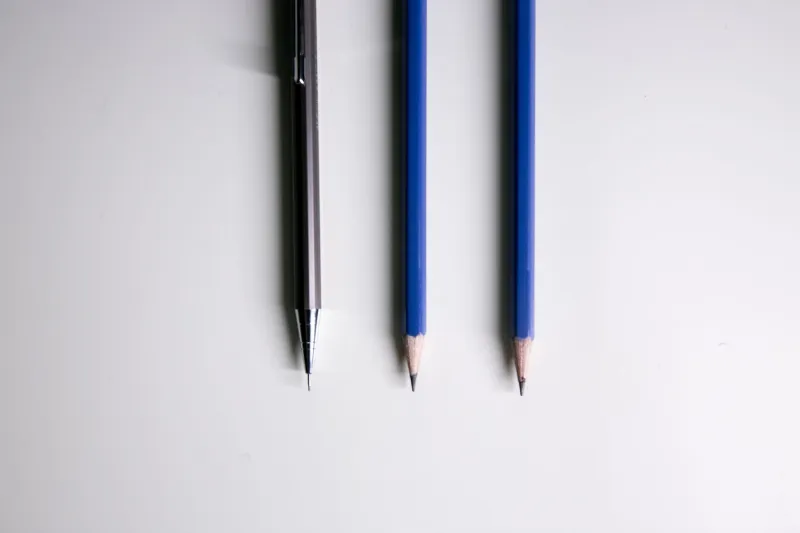
Somewhere between third period and lunch, a transaction is happening. Not drugs. Not contraband. Something arguably more dangerous to parental wallets: a limited-edition Pentel Graph Gear 1000 in a colorway that technically never made it to US retail shelves, changing hands for forty-two dollars and a bag of Takis.
Welcome to the stationery underground.
The Drop Culture Nobody's Talking About
If you've spent any time adjacent to a Gen Z teenager in the last two years, you've probably noticed the pencil case situation getting out of hand. We're not talking about a yellow No. 2. We're talking about matte-finish mechanical pencils with knurled metal grips, retractable tips, and lead advance mechanisms so satisfying they've spawned entire ASMR channels. Japanese stationery brands like Uni, Pentel, Tombow, and Staedtler's Japan-exclusive lines have quietly built the kind of cult following usually reserved for Supreme drops and Air Jordan restocks.
The mechanics of the craze mirror sneaker culture almost beat for beat. A brand announces a limited colorway or a Japan-only model. Proxy buyers — American teens with relatives in Japan, or those willing to pay international shipping markups — snag units. Then the secondary market kicks in, and suddenly a pencil that retailed for roughly eight hundred yen is listed on Mercari for twenty-eight dollars with the caption "deadstock, never sharpened."
Never sharpened. A mechanical pencil. That's where we are.
The Collectors Who Started It All
Talk to any serious collector in this space and they'll tell you the gateway drug was usually a Zebra DelGuard or a Pilot Automac — mechanical pencils engineered with internal shock-absorbing mechanisms that prevent lead breakage. The technology is genuinely impressive, and once you've written with one, the drugstore variety feels like scratching a chalkboard with a stick.
"I bought my first Japanese mechanical pencil because I kept snapping lead during AP Chemistry notes," explains one high school junior from outside Chicago who asked to be identified only as "Griff" because, and we're quoting directly, "my mom doesn't know how much I've spent." "Then I went down a YouTube rabbit hole, found out about the Pentel Orenz Nero, and kind of lost two months of my life."
Griff currently owns forty-seven mechanical pencils. He uses three of them. The rest are, in his words, "for the collection."
This distinction — between using and collecting — is central to the whole phenomenon. For many teens, the pencils function less as writing instruments and more as artifacts. Proof of taste. Proof of access. Proof that you found the thing before everyone else did.
The Trading Floor (Also Known as the Cafeteria)
The actual trading ecosystem is more organized than you'd expect from a group of people who still have homeroom. Discord servers dedicated to Japanese stationery trading have sprouted up with hundreds of members, complete with pinned price guides, authentication tips (yes, there are fake Japanese pencils, and yes, that is a sentence that exists), and heated debate threads about whether the Pilot S20 is overrated.
Spoiler: the thread consensus is that it is not overrated and anyone who says otherwise is wrong.
Trades happen in person and online. A rare Tombow Mono Graph Lite in a pastel-gradient colorway might go for straight cash, or it might be bartered against a Staedtler 925-25 and a set of Uni Nano Dia lead refills. The negotiation etiquette is surprisingly formal — lowballing is frowned upon, condition matters enormously, and original packaging adds a premium that collectors take very seriously.
"I once traded a pencil for twenty dollars and a homemade boba," admits a fifteen-year-old from suburban Texas who runs a stationery trading account on TikTok with over eight thousand followers. "But usually I try to keep it professional."
Professional. At fifteen. Trading pencils.
We love this country.
What the Price Tags Actually Say
The markup logic follows the same emotional math as any collector's market: scarcity plus desirability plus community validation equals price. A Pentel Graph 1000 For Pro in a standard colorway runs about twelve to fifteen dollars imported. The same pencil in a limited-release matte black with gold accents? Collectors have reported seeing them listed for sixty dollars or more on resale platforms, with buyers actually paying it.
For context, sixty dollars is more than most teens earn in a week of babysitting. And yet.
What makes this particularly interesting is that unlike sneakers — where the resale premium is partly about status signaling to a broad audience — Japanese stationery clout is hyper-niche. You can carry a sixty-dollar pencil to school and ninety percent of people will see a pencil. Only the five percent who are also in the know will recognize it, nod slightly, and feel the warm glow of shared obscure enthusiasm.
That's actually the point.
Community Is the Real Product
Peel back the economics and what you find underneath is something genuinely sweet: a generation of teenagers finding their people through extremely specific taste. The stationery trading world is overwhelmingly welcoming, weirdly drama-free compared to other collector communities, and deeply enthusiastic about bringing new people in.
"If someone says they want to get into Japanese stationery, everyone immediately wants to help," says Griff. "It's not gatekeepy. People will spend an hour explaining the difference between 0.3 and 0.5 lead to a total stranger."
The Discord servers double as study groups, creative communities, and mental health check-in spaces. People share their pencil hauls alongside their anxiety about finals. The aesthetic of Japanese stationery — precise, considered, quietly beautiful — seems to resonate with teens who are drawn to the idea that the tools you use to do hard things can also be objects of genuine joy.
There's something almost philosophical about it. In a world of digital everything, choosing a specific physical pencil — researching it, saving for it, trading for it — is an act of deliberate, tactile intention. You're saying: this thing matters. The way I write matters. The objects I surround myself with matter.
Or you're just really into the way the lead advances on the Orenz Nero. Both are valid.
The Part Where We Acknowledge This Is Slightly Unhinged
Look, we're not going to pretend there isn't something objectively chaotic about a teenager spending forty-two dollars on a pencil. Parents finding out about these collections reportedly react with the same energy as discovering an inexplicable Amazon purchase — confusion, mild alarm, the urge to say "but you could buy so many normal pencils for that."
And yes. You could. You could buy approximately four hundred and twenty normal pencils for forty-two dollars. But four hundred and twenty normal pencils will not make you feel like you've cracked a secret code. They will not connect you to a Discord server full of people who get it. They will not have a knurled grip that fits your hand like it was designed specifically for you.
The lunch money is gone. The pencil is eternal.
Or at least until the next limited drop comes out.