Cuddle Circuits and Digital Companions: How Japan's Loneliness Gadgets Became America's Weirdest Wellness Hack
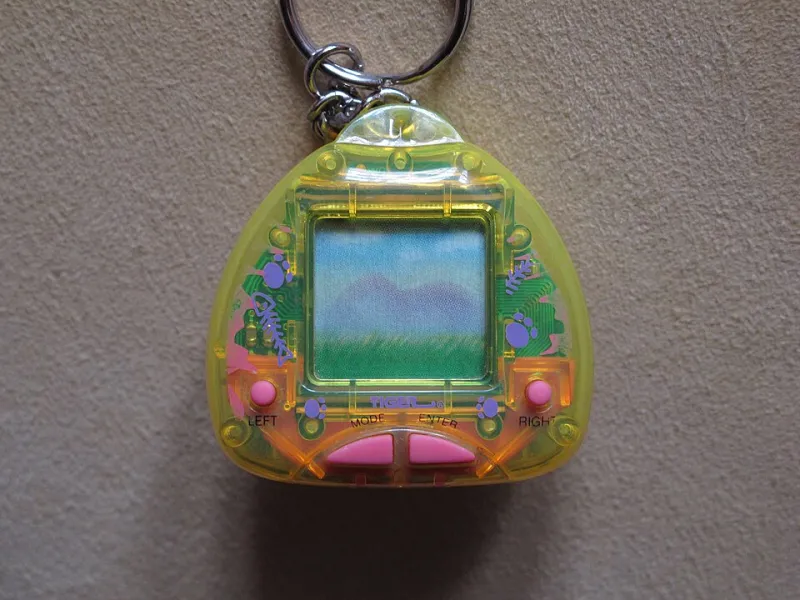
Photo: Zeitblick, CC BY-SA 3.0, via Wikimedia Commons
Let's be real for a second. The American wellness industry has thrown everything at the loneliness epidemic — meditation apps, journaling prompts, $47 adaptogen lattes, and more self-help podcasts than any one human could consume in three lifetimes. And yet, somehow, the thing that's actually making people feel better is a small, egg-shaped plastic device that dies if you forget to feed it.
Welcome to the golden age of Japanese emotional support gadgets — a category of products so wonderfully unserious that they've accidentally become one of the most serious conversations in American mental health culture.
The Tamagotchi Didn't Come Back. It Never Left.
Bandai Namco's decision to relaunch updated Tamagotchi models wasn't just nostalgia bait — it was a cultural gut punch that landed harder than anyone expected. The Tamagotchi Uni, released in 2023 with Wi-Fi connectivity and a color screen, sold out repeatedly across US retail channels. Adults in their 20s and 30s weren't buying these for their kids. They were buying them for themselves, clipping them to backpacks and work lanyards like tiny, needy talismans against the void.
And the thing is? There's actual psychological logic here. Caring for a virtual creature — even a pixelated one with the aesthetic sensibility of a 1996 fever dream — activates real nurturing instincts. It gives structure. It gives purpose. It gives you something to worry about that isn't, say, your credit score or the state of democracy.
As one very earnest Reddit thread in r/tamagotchi put it: "I haven't been this consistent about anything since I was in therapy. My Tama has a better routine than I do."
Enter the Breathing Plushie. Yes, Really.
If the Tamagotchi is the gateway drug, then products like Qoobo — a Japan-designed cushion with a slowly wagging tail — are the deep end of the pool. Qoobo doesn't have a face. It doesn't make noise. It just... wags. Gently. Rhythmically. Like a very chill cat that has achieved enlightenment.
Americans who can't have pets due to allergies, apartment restrictions, or sheer logistical chaos have been quietly losing their minds over it. The product's US sales have climbed steadily, driven largely by word-of-mouth on TikTok, where creators film themselves using Qoobo during anxiety spirals, late-night work sessions, and — in one memorably chaotic video — a family dinner where it allegedly "kept the peace."
Then there's Lovot, the round-eyed companion robot from Japanese startup Groove X, which has become something of a legend in US tech and wellness circles. Lovot doesn't do anything useful. It can't order your groceries or control your smart home. It simply waddles toward you when you're sad, makes small sounds, and radiates warmth. It costs thousands of dollars. People are saving up for it like it's furniture.
Why Traditional Wellness Apps Just Aren't Hitting Anymore
Here's where it gets interesting — and a little uncomfortable. The American wellness app market is enormous, worth billions, and yet satisfaction rates among Gen Z users have been quietly tanking. There's growing fatigue around the optimization-heavy language of most mental health platforms. Being told to "track your mood" and "set intentions" starts feeling like homework after a while, and homework has never once cured loneliness.
Japanese emotional support gadgets operate on a completely different emotional frequency. They don't ask you to be better. They don't send you push notifications about your screen time. They just exist alongside you, needy and weird and oddly comforting, like a very low-maintenance friendship.
This is deeply resonant with how younger Americans are starting to think about self-care — less as a performance of productivity and more as permission to just... be. To have something soft in your life that doesn't demand growth metrics.
The AI Companion Layer Gets Complicated
Of course, it wouldn't be 2024 without AI entering the chat — sometimes literally. Japanese companionship apps and AI personality systems have been crossing the Pacific with increasing speed. Gatebox, a holographic AI companion system originally designed around anime character Azuma Hikari, has developed a devoted US following among people who want something between a smart speaker and a roommate.
The ethics here are genuinely murky, and Fura Coco isn't here to pretend otherwise. Critics — including therapists and social researchers — raise valid concerns about whether AI companions treat loneliness or simply paper over it. There's a real conversation to be had about whether outsourcing emotional needs to technology, however charming that technology might be, creates a sustainable path to connection or a very comfortable dead end.
But here's the counterpoint that keeps emerging from actual users: for people with social anxiety, chronic illness, or simply lives that don't accommodate easy community-building, these gadgets aren't replacements for human connection. They're scaffolding. They're the thing that gets you through Tuesday at 2am so you can try again on Wednesday.
What This Whole Thing Says About Us
There's something quietly profound about the fact that America — a country that has built entire industries on the idea of radical self-sufficiency — is increasingly finding comfort in small, dependent, Japanese-designed digital creatures. The Tamagotchi, at its philosophical core, is about mutual need. You care for it; it needs you. That's not a wellness hack. That's a relationship.
Maybe the loneliness epidemic doesn't need a sleeker app or a better algorithm. Maybe it just needs something small and a little bit silly that wags its tail when you walk into the room.
Japan figured that out decades ago. America is just catching up — one pixelated pet at a time.