Pen Cups, Washi Tape Towers, and Zero Apologies: The Joyful Desk Chaos Replacing American Minimalism
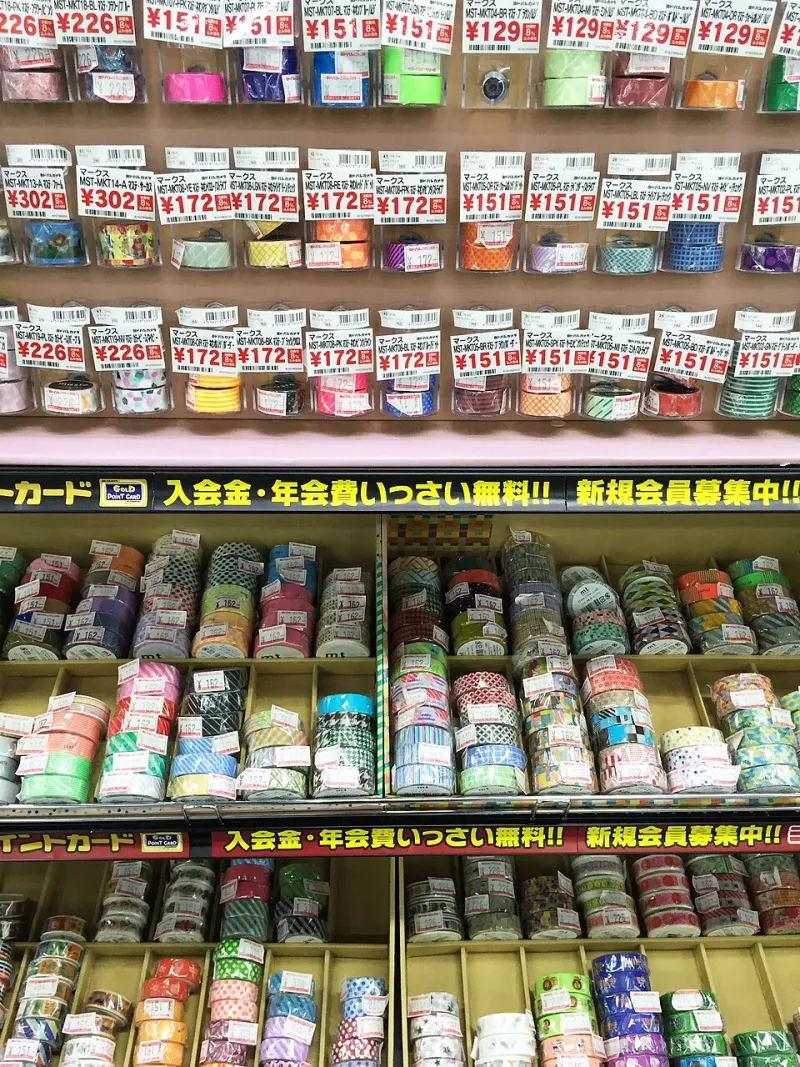
Photo: General Eccentric, CC BY-SA 2.0, via Wikimedia Commons
There was a moment — roughly spanning 2015 to 2021 — when the aspirational American workspace looked like a hostage situation for objects. One laptop. One plant. A single, lonely candle. Everything white. Everything silent. Marie Kondo had swept through our collective living spaces like a very polite tornado, and the cultural message was clear: if it doesn't spark joy, it doesn't exist, and honestly, maybe nothing should exist.
Then something broke. Or rather, something arrived — in bubble-wrapped packages from Japan, hauled home from Kinokuniya, or discovered at 2 a.m. through a TikTok rabbit hole involving a person in Tokyo showing off their stationery drawer like it was the Louvre. And suddenly, the empty desk didn't feel aspirational anymore. It felt sad.
Welcome to the Great Stationery Rebellion. Population: your entire For You page.
The Washi Tape Heard 'Round the World
If you need a single artifact to represent this cultural shift, make it washi tape. Specifically, the moment an American Gen Z-er bought their first roll — probably something featuring tiny mushrooms or a vintage Japanese woodblock print pattern — and then, almost immediately, bought seventeen more.
Washi tape is technically just decorative masking tape. It is also, apparently, a gateway drug. Once you have it, you need a journal to put it in. Once you have a journal, you need stickers to complement the tape. Once you have stickers, you need the right pens to write alongside them. The next thing you know, you have a dedicated shelf system, a spreadsheet tracking your collection, and a deeply personal relationship with a stationery brand called Midori that you talk about at parties.
This is not an exaggeration. Browse any "desk setup" tag on TikTok or Instagram and you'll find American users — largely in their late teens and twenties — proudly displaying workspaces that look like a Tokyo stationery store had a very productive weekend. Pen holders overflowing with Pilot G2s and Zebra Sarasa Clips and at least one brush pen they're still figuring out. Notebooks stacked in deliberate towers. A corner dedicated entirely to stamps and ink pads. Sticky notes in eight colors because, yes, all eight are necessary.
The aesthetic has a name in some corners of the internet: "organized chaos," though that phrase undersells the intentionality involved. This isn't a messy desk. This is a curated desk. There's a difference, and Gen Z will absolutely explain it to you.
Productivity Culture's Unlikely Opponent: A Cute Frog Stamp
Here's where it gets genuinely interesting, because this isn't just about pretty supplies. The stationery obsession is doing something quietly subversive in a culture that spent years worshiping at the altar of optimization.
For a solid decade, American workplace culture — and the lifestyle content surrounding it — was obsessed with efficiency. Bullet journals were everywhere, but the dominant version was rigorous, almost militaristic: habit trackers, time-blocking systems, color-coded productivity matrices. Your journal wasn't for you, it was for your output. Even self-care got gamified.
Japanese stationery culture, by contrast, carries a fundamentally different philosophy. The Japanese concept of bungu (stationery/office supplies) treats these objects as worthy of genuine appreciation in themselves — not as tools to be optimized, but as small pleasures to be savored. A well-made pen isn't just functional; it's something you hold and appreciate. A beautifully designed notebook cover matters because beauty, in this worldview, is not frivolous.
When American Gen Z latched onto this, something clicked. Decorating a planner spread with washi tape and tiny mushroom stickers is, on the surface, completely impractical. It adds time. It serves no productivity metric. And that, it turns out, is exactly the point. In a generation that grew up being told every hobby should be a side hustle and every skill should be monetizable, choosing to spend twenty minutes making a journal page pretty just because it's nice is a small, stubborn act of resistance.
The messy, joyful desk isn't a failure to achieve minimalism. It's a rejection of the premise.
From Hobonichi to Hauls: The Community That Built Itself
No conversation about this phenomenon is complete without acknowledging the absolutely thriving online ecosystem that surrounds it. "Stationery haul" videos regularly rack up hundreds of thousands of views. Hobonichi Techo — a Japanese planner brand so beloved it has its own annual release event that fans track like a product launch — has developed a fanatical American following that participates in community threads debating cover designs and paper weight with the intensity usually reserved for sneaker drops.
Channels dedicated to "plan with me" content — where creators film themselves setting up weekly spreads in real time — have turned stationery into a form of slow TV. It's meditative, oddly satisfying, and deeply communal. People leave comments about specific tape patterns. They ask where a particular stamp is from. They share their own setups in response. It's one of the warmer corners of the internet, which is saying something.
American brands have noticed, of course. Target's stationery section has quietly leveled up. But the genuine enthusiasm remains anchored in Japanese brands — Midori, Stalogy,通帳 (passbook-style notebooks), Kokuyo, Sun-Star — because the products themselves carry a quality and design sensibility that's difficult to replicate. When a Muji gel pen writes differently than anything you've used before, you understand why people talk about pens the way other people talk about wine.
The Desk as Self-Portrait
Maybe the most interesting thing about this whole movement is what it says about self-expression in 2024. Gen Z has grown up with digital everything — digital communication, digital entertainment, digital identity. The tactile, physical experience of writing with a good pen in a beautifully made notebook, surrounded by objects chosen specifically because they bring a small spark of delight, is almost countercultural in its analog-ness.
Your desk, in this framework, isn't a productivity station. It's a self-portrait. The washi tape you choose, the pens you collect, the stickers you hoard — they say something about who you are and what you find beautiful. They're not clutter. They're vocabulary.
Marie Kondo, for her part, has reportedly embraced a somewhat more relaxed approach to tidiness in recent years. Maybe she saw the washi tape towers coming. Maybe she, too, found a stamp of a small frog that sparked an unreasonable amount of joy.
Honestly? Same.